Is functional training good for joint pain?
Not reliably. Moving and getting stronger is good for the health of your joints, so functional training usually provides that. However, functional training dogmatically rejects some of the most helpful exercises for clients with various aches and pains.
There’s no universally accepted definition of the term “functional training.” However, there is agreement on what’s not included in functional training, and that is isolation exercises. In other words the villain of functional training are isolation exercises. The simplest example of an isolation exercise would be a bicep curl because the exercise tries to isolate your biceps. Functional training devotes would say that training your biceps in isolation (1) won’t transfer to real life, (2) promotes “dysfunction” and elbow pain, and (3) are only for vanity. To these I say:
(1) Stronger arms absolutely transfer to everything you do involving your arms – carrying, pulling, pushing, and (most importantly) catching yourself when you fall so you don’t end up with a brain injury or broken hip. You can read more about that here, here and here.
(2) The dysfunction myth is covered above, and as for elbow pain the opposite is true. First, look at the claim above with logic, the claim being “strengthening the muscles that attach to your elbows will make them more susceptible to pain and injury.” How much sense does that make? Bicep curls and tricep extensions are used in elbow rehab because they are effective.
(3) What kind of person looks down their nose at someone who cares about their appearance?
Lastly, here’s the simplest example: shin splints. These are very simple to get rid of. 99% of the time you need just one isolation exercise to target the muscles on the front of the shin (anterior tibialis). When someone can do 25-30 good reps, they’ll be good to go. In all my years serving in the cult of functional training I was never able to help a single client with shin splints because isolating these muscles (or any muscle) was forbidden. (Bonus, aside: this same isolation exercise helps prevent ankle sprains, reduce knee pain, reduce tripping, and more.)
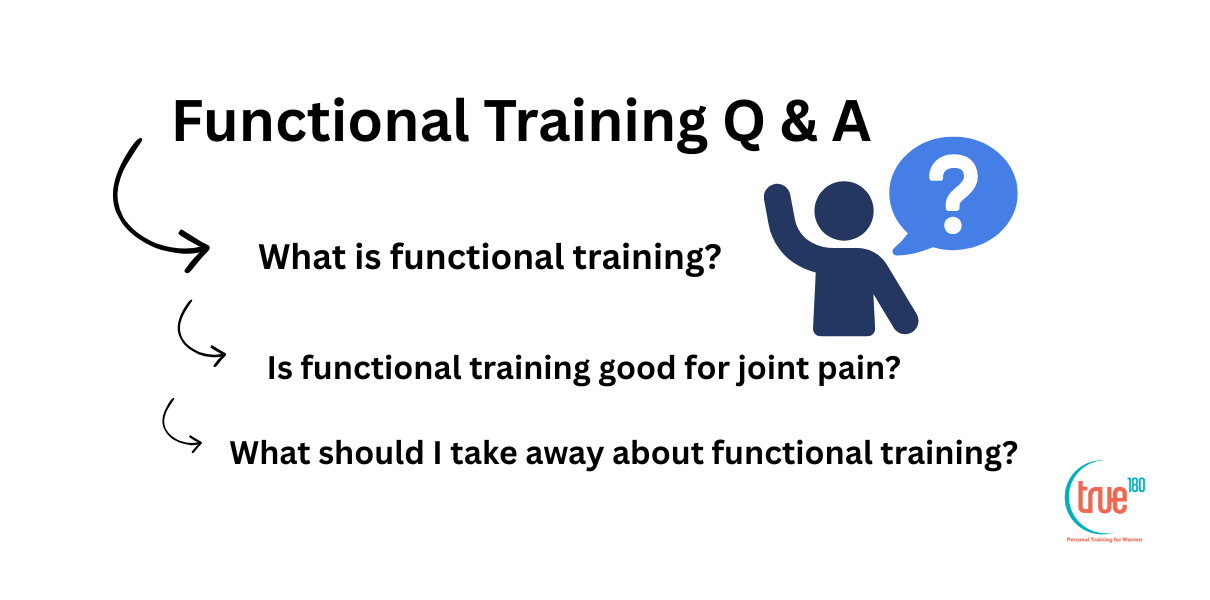
What is functional training?
It’s a good idea taken so far that it became a bad idea that birthed a false dichotomy.
The good:
- Time is limited. Most people will not rearrange their lives to make time for the schedule of a competitive bodybuilder (20+ hours a week of training).
- Compound exercises (i.e. squats) work more muscles at once than isolation exercises (i.e. leg extension machine), and are therefore more time efficient.
- Use it or lose it: if you never do exercises that challenge your balance then your balance will rapidly disappear.
The bad (too far):
- #1 & 2 taken to the extreme become “you should never do any isolation exercises, everything that looks like bodybuilding is stupid, bad and dangerous and will make older people fragile and immobile.” [This is a fair summary.]
- Some of the Irony in the above is that bodybuilders use lots of so called “functional exercises” such as squats, push ups and pull ups… that part is ignored because it doesn’t fit the narrative.
- #3 taken too far becomes “all exercises should be done on one leg while twisting around.” [I am using some hyperbole here.]
What should I take away about functional training?
In one sentence: You don’t need to vilify isolation exercises to know that other exercises are also beneficial.
So-called “functional” exercises are really just compound exercises (push ups, squats, etc) because that’s what left after you vilify all isolation exercises. Compound exercises, single leg exercises, exercises involving rotation are all great and provide unique benefits. However, as I keep telling my daughters, “me complimenting your sister doesn’t mean I am criticizing you…” In other words, me saying positive things about isolation exercises is not slander towards so-called functional training, or vice versa. At T180 we do both because the combination is more effective than either alone.
Doing only compound exercises for your whole workout is too exhausting, and leaves gaps in coverages (especially knees, ankles, and wrists/hands). Isolation only exercises would take too much time to cover your whole body, and doesn’t burn enough energy to help with conditioning or fat-loss.
Bottom Line regarding Functional Training
The cult of functional training tells us that only troglodyte bodybuilders would ever be so asinine as to do a bicep curl, and that these sorts of isolation exercises are “bad.” This sort of black and white thinking is appropriate for moral issues (murder is wrong), but not for exercise selection. Energy spent demonizing bicep curls is wasted (and makes you look dumb), whereas energy spent doing bicep curls only makes your arms look even better.